The transition from modular to structural cell-to-chassis architecture increases energy density while eliminating traditional module-level repair pathways. This shift to bonded, monolithic packs effectively ends individual cell repairs, necessitating a move toward full-pack replacements and advanced diagnostics to maintain long-term vehicle health.
From Modules to Monoliths
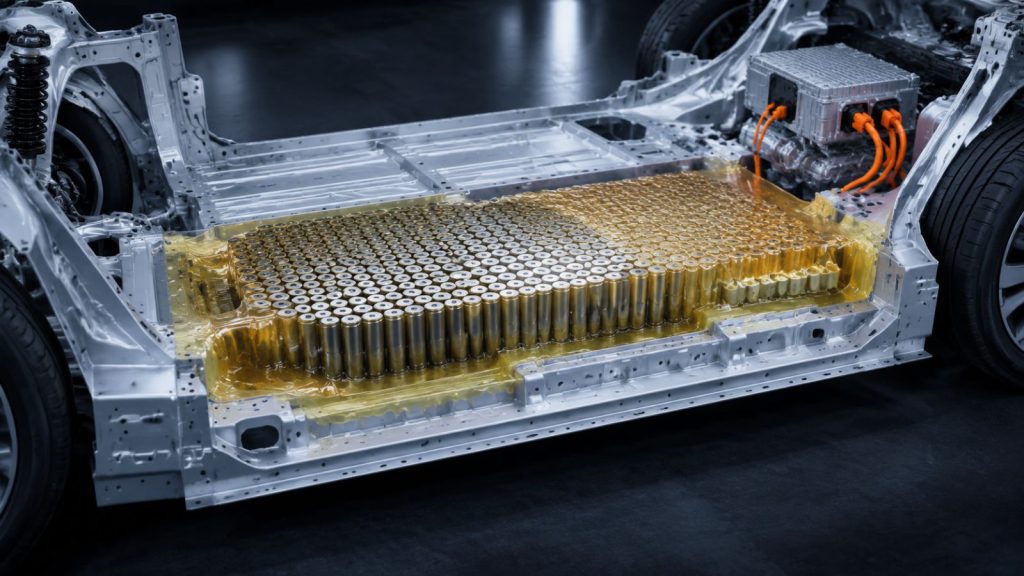
I used to be able to isolate a failing module in a traditional 2170 pack, separate the individual high voltage busbars, and swap out the compromised unit to restore full vehicle operation. That era is effectively over with the arrival of the 4680 cell. The structural battery pack is a single, monolithic assembly where individual cylindrical cells are integrated directly into the floor structure of the vehicle.
When I look at these newer platforms on the lift, I do not see a serviceable component housing discrete sub-assemblies. I see a permanent, load-bearing foundation that forms the physical cabin floor. If a single internal cell suffers a localized failure or a parasitic drain, there is no engineered pathway to extract it without physically cutting into and destroying the structural integrity of the entire chassis floor pan.
The Structural Integrity Tradeoff
Tesla designed this architecture to eliminate hundreds of parts while drastically increasing torsional stiffness and lowering the center of gravity for improved handling. Mechanical rigidity compromises serviceability because the high-strength epoxy acts as both a structural member and an insulator. While the dense potting serves as a moisture barrier, any breach in the perimeter seal allows water to infiltrate the internal cell matrix, leading to critical electrical failures. In our damp climate, this moisture ingress attacks the isolation resistance of the primary high-voltage system, creating a critical vulnerability that is difficult to repair.
Navigating High Voltage Discharge Protocols
Structural 4680 packs require precise high-voltage discharge protocols due to their high energy density and bonded architecture. Any drop in isolation resistance creates an immediate electrical hazard, which I must confirm using specialized diagnostic equipment. While factory manuals suggest a clean maintenance path, the shop-floor reality is that these units are unyielding and cannot be serviced for individual anomalies. Ultimately, this power plant functions as a single, permanently bonded unit, rendering traditional component-level repairs impossible.
Why Your Local Independent Shop Faces a 4680 Wall
The reality of this cell-to-chassis architecture is underscored the moment a vehicle enters the shop with an active battery system fault. Instead of a traditional teardown, I must deploy diagnostic software to interface with the battery management system and probe the internal sensors of a locked black box. Because the thousands of 4680 cells are encased in a solid pour of structural resin, the entire assembly is an unserviceable unit that cannot be opened. Any attempt at manual separation would instantly compromise the vehicle’s structural safety, as independent shops lack the industrial tools necessary to cut through the potting material safely.
The Gritty Reality of Epoxy Potted Cell Arrays
The structural potting material struggles under real-world conditions because daily thermal cycling forces cells to expand and contract against the rigid epoxy. Living in the Willamette Valley means our vehicles face constant saturation. My shop sits right off Scholls Ferry, and I see the cumulative effect of the Pacific Northwest winter on these packs.
The constant thermal cycling, moving from the cold, damp morning air onto the stop-and-go congestion of the 217, causes the structural epoxy to expand and contract. That mechanical fatigue eventually spider-webs the resin. Once breached, our local road brine wicks straight into the cell matrix, causing the erratic current tracking I’m pulling from the BMS logs.
Diagnostic Realities in a Sealed Chassis Era
Physical access to the chassis is precluded for safety, necessitating a reliance on high-voltage isolation parameters and shunt resistance data to secure a conclusive diagnostic result. The smoking gun for an unserviceable pack is a catastrophic drop in isolation paired with localized voltage variances that exceed management logic tolerances. When software logs a permanent fault from moisture tracking or cell degradation, the forensic conclusion is absolute. Given the structural nature of the floor, these conditions leave no room for spot repairs and require us to condemn the unit for a full assembly swap.
Diagnostic Verdict: If I’m seeing a persistent 150kΩ isolation drop on a vehicle coming in off the 217, I’m not looking for a software bug—I’m looking for a seal breach. When my thermal imaging captures a 15°F delta across the floor pan during a DC fast-charge, that’s the smoking gun for delamination in the structural matrix. At that point, the pack is compromised by local road contaminants, and it’s a total loss.
The Future of Tesla Battery Health Monitoring
The adoption of structural 4680 cells means that the operational lifespan of the entire vehicle is inextricably linked to the chemical stability of the internal cell chemistry and the absolute sealing of the lower chassis. I analyze digital health markers to identify minor insulation failures, preventing them from progressing into total system losses.
For the vehicle owner, this structural evolution means the main battery assembly can no longer be viewed as a standard wear item that can be reconditioned over time. It is the literal foundation of the vehicle, requiring highly specialized data analysis and advanced diagnostic tools to monitor, verify, and maintain its integrity.
If you suspect your Tesla’s 4680 structural battery is showing signs of moisture ingress or isolation faults, don’t wait for a total system failure. Reach out to our expert technicians at Tigard SUV and Auto, located at 12394 SW Scholls Ferry Rd, Tigard, OR, to schedule a professional integrity evaluation today.
Frequently Asked Questions
Can an independent shop repair a failed Tesla 4680 structural battery?
No, because the cells are bonded with high-strength structural epoxy as part of the chassis. Since the battery pack is a sealed, single-piece unit, individual cells cannot be repaired, meaning the entire assembly must be replaced if an internal failure occurs.
Is your Tesla 4680 battery considered non-serviceable?
Yes, because the advanced structural adhesives used to integrate the cells into the vehicle frame are designed for permanent rigidity. The resin encapsulation creates an impenetrable barrier that demands industrial-grade automation to breach, rendering the pack a permanently sealed, non-serviceable unit for its entire service life.
Can technicians diagnose a 4680 battery failure without opening the pack?
Yes, by utilizing advanced diagnostic platforms like Tesla Toolbox 3 to monitor high-voltage isolation resistance and internal shunt values. When the software identifies a permanent insulation fault or unfixable cell-voltage issues, it marks the battery as compromised and requires the entire system to be replaced.
Does structural battery design improve vehicle safety?
Yes, by integrating the battery as a core load-bearing member to significantly increase the chassis’s torsional stiffness. This engineering approach creates a more rigid safety structure around the passenger cabin and improves handling characteristics, even though it necessitates sacrificing the ability to perform modular component servicing.
Does the climate in Tigard/Portland accelerate 4680 battery failure?
Yes, high humidity combined with the heavy salt-brine treatment on the OR-217 and Scholls Ferry Road creates a high-risk environment that chews through 4680 structural seals. Road salts can penetrate chassis seals, causing internal isolation faults. If you see high-voltage or BMS warnings, seek an immediate professional structural integrity evaluation.