Urban traffic spikes exhaust temperatures while starving turbo housings of airflow, causing oil coking. Trapped heat bakes leftover oil into carbon sludge, destroying precision bearings. Prevent costly failures by idling after hard drives, watching for startup smoke, and maintaining strict synthetic oil changes. Proper cooling strategies keep your twin-scroll turbo spinning reliably for miles.
Navigating stop-and-go traffic down SW Scholls Ferry Road or pushing hard up toward Mount Hood creates severe thermal stress for modern BMW engines. Twin-scroll turbochargers easily spin past 100,000 revolutions per minute while absorbing massive amounts of exhaust heat. When I park a customer’s car back in the lot, I know that extreme heat is instantly trapped with nowhere to go. Without active cooling, that lingering heat cooks the oil right inside the turbocharger core, destroying the precision bearings and triggering massive repair bills.
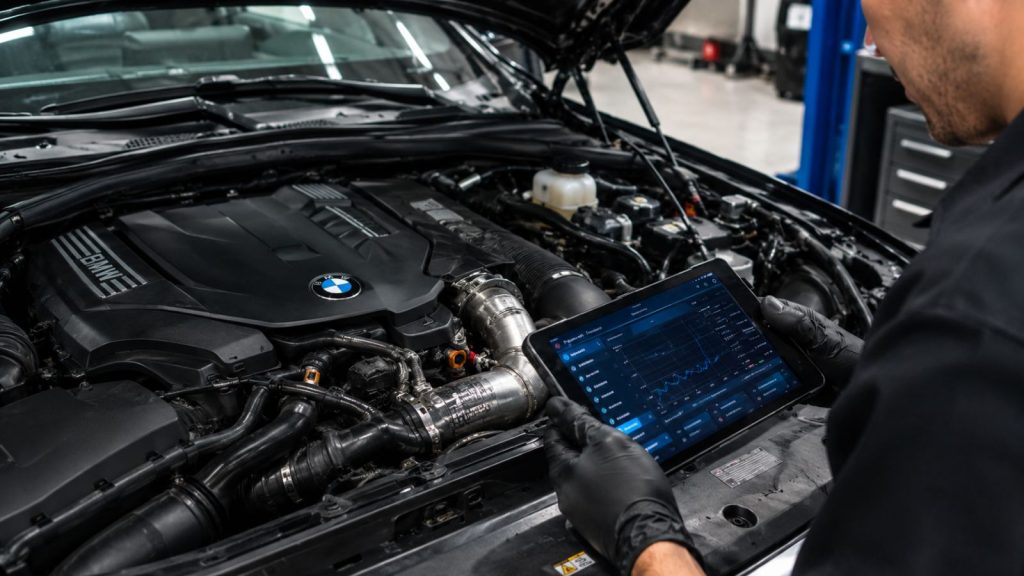
How BMW Turbo Systems Handle Heat Cycling
Every single drive subjects your engine’s metal components to intense thermal expansion followed by rapid cooling contraction. Hot exhaust gases exiting the cylinders directly drive the turbine wheel inside the turbocharger housing. While you are driving, pressurized engine oil and dedicated coolant passages absorb this immense heat and transport it safely away.
The trouble starts the exact second you switch off the ignition and the mechanical oil pump stops flowing. Residual heat radiating from the exhaust manifold bakes the thin film of remaining synthetic oil trapped inside the tiny shaft bearing clearances. Over time, this extreme thermal spike converts the oil into a hard, abrasive carbon residue that destroys precision tolerances and seizes the turbocharger.
Advanced BMW Turbo Cooling Strategies
Fortunately, modern direct-injection powerplants automate the cooling process to combat post-shutdown heat-soaking. BMW engineers designed these systems to protect vital components without requiring you to sit in the car waiting to shut it off:
- Auxiliary electric water pumps monitor residual heat levels via computer sensors.
- Dedicated coolant channels continue flowing for several minutes after the engine stops.
- Integrated oil-to-coolant heat exchangers prevent fluid pooling in high-heat zones.
- Thermosiphon circulation pulls cooler fluid through the system naturally via thermal convection.
Warning Signs of BMW Turbocharger Failure
Catching radial shaft play early during routine oil service prevents total turbine wheel contact and stops metal debris from getting sucked into your intercooler. When I inspect vehicles that see heavy urban commutes or frequent mountain driving, I always look for these specific physical indicators:
- Blue or gray smoke puffing from the exhaust tailpipe upon startup is a classic red flag. Extreme heat cycles harden the internal oil seals, letting engine oil leak past the turbine shaft and burn inside the hot exhaust.
- A faint oily smell lingering around the front of the vehicle after a spirited drive usually points to weeping oil feed line banjo fittings or cracked gasket seals.
- A whistling or whining noise under acceleration indicates failing turbocharger bearings. As heat-damaged bearings lose their clearances, the turbine wheel starts making contact with the compressor housing. Ignoring this metallic screeching sound leads to a complete shaft fracture and sends metal debris straight into your engine cylinders.
BMW Turbocharger Diagnostic and Inspection Process

When I pull the feed line banjo bolt on an N55 or B58 after a hard run down Scholls Ferry, I am looking for a gritty varnish ring on the inner diameter. If it catches my fingernail, the core is already coking from heat-soaking, regardless of what the DME fault memory says.
Diagnosing thermal wear on a BMW turbocharger system requires a hands-on, methodical approach that goes far beyond reading dashboard check engine lights. We evaluate real-time data and physical hardware components directly:
- Connecting factory-level diagnostic software to review stored fault codes and live Digital Motor Electronics logs.
- Monitoring auxiliary electric water pump voltage errors and post-shutdown run-time records.
- Inspecting internal oil feed and return lines with an industrial borescope for hidden sludge buildup.
- Checking compressor wheels for excessive axial and radial shaft play beyond factory tolerances.
- Pressure testing cooling circuits to locate restricted lines or trapped air pockets.
Essential Maintenance for Pacific Northwest Drivers
Living and driving in the Pacific Northwest introduces unique environmental challenges for turbocharged European engines. Frequent short trips during cold, rainy mornings prevent your engine oil from reaching proper operating temperatures.
When moisture mixes with oil, it accelerates sludge formation inside the crankcase. To fight this, I always recommend letting your engine idle for sixty seconds after highway runs to drop exhaust temperatures. Sticking to a strict five-thousand-mile oil change interval prevents premature fluid breakdown. Using high-grade synthetic oils approved by BMW resists extreme thermal stress and keeps your entire thermal management system operating at peak efficiency.
Professional BMW Service in Tigard, Oregon
Unchecked thermal fatigue compromises internal oil seals, forcing pressurized fluid past the turbine shaft and directly into the exhaust tract. Skipping independent shop diagnostics means relying on corporate dealership backlogs that completely overlook localized driving stress factors.
Bring your vehicle to Tigard SUV and Auto located at 12394 SW Scholls Ferry Rd, Tigard, OR 97223 today for precise diagnostic evaluations and expert service tailored specifically to your vehicle.
Frequently Asked Questions
Does the auxiliary electric water pump continue running after shutdown?
Yes. The auxiliary coolant pump activates automatically whenever the computer detects excessively high turbocharger temperatures after turning off the engine. This targeted circulation prevents localized coolant boiling inside the center housing.
Can short urban commutes cause turbocharger damage?
Yes. Frequent short trips prevent the engine oil from reaching optimal operating temperatures to burn off accumulated condensation. Moisture mixing with extreme turbo heat accelerates internal sludge formation.
Should I idle my BMW before turning it off after highway driving?
Yes. Let the engine idle for sixty seconds after driving so oil and coolant keep flowing while exhaust temperatures drop. This simple habit prevents severe heat-soaking damage to the bearings.
Do synthetic oils resist heat-soaking better than conventional oils?
Yes. High-grade synthetic oils maintain molecular stability under extreme thermal stress and resist forming carbon coking deposits. Regular oil changes using factory-approved fluid specs remain essential for long-term turbo reliability.